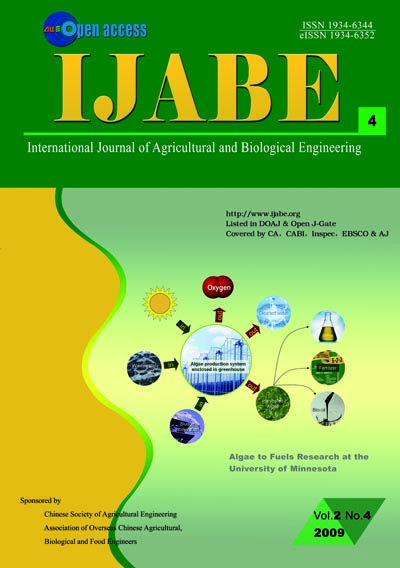
Review of biological and engineering aspects of algae to fuels approach
Keywords:
algae, microalgae, open pond, enclosed photobioreactor, light, harvest, dewatering, extraction, hydrothermal liquefaction, gasification, pyrolysis, fermentationAbstract
Current biofuel production relies on limited arable lands on the earth, and is impossible to meet the biofuel demands. Oil producing algae are alternative biofuel feedstock with potential to meet the world's ambitious goal to replace fossil fuels. This review provides an overview of the biological and engineering aspects in the production and processing technologies and recent advances in research and development in the algae to fuels approach. The article covers biology, selection and genetic modification of algae species and strains, production systems design, culture media and light management, harvest and dewatering, downstream processing, and environment and economic assessment. Despite the many advances made over several decades, commercialization of algal fuels remains challenging chiefly because of the techno-economic constraints. Technological breakthroughs in all major aspects must take place before commercial production of algal fuels becomes economically viable.
Keywords: algae, microalgae, open pond, enclosed photobioreactor, light, harvest, dewatering, extraction, hydrothermal liquefaction, gasification, pyrolysis, fermentation
DOI: 10.3965/j.issn.1934-6344.2009.04.001-030
Citation: Paul Chen, Min Min, Yifeng Chen, Liang Wang, Yecong Li, Qin Chen, et al. Review of the biological and engineering aspects of algae to fuels approach. Int J Agric & Biol Eng, 2009; 2(4): 1
Downloads
Published
How to Cite
Issue
Section
License
Copyright (c) 2010 International Journal of Agricultural and Biological Engineering

This work is licensed under a Creative Commons Attribution 4.0 International License.
IJABE is an international peer reviewed, open access journal, adopting Creative Commons Copyright Notices as follows.
Authors who publish with this journal agree to the following terms:
- Authors retain copyright and grant the journal right of first publication with the work simultaneously licensed under a Creative Commons Attribution License that allows others to share the work with an acknowledgement of the work's authorship and initial publication in this journal.
- Authors are able to enter into separate, additional contractual arrangements for the non-exclusive distribution of the journal's published version of the work (e.g., post it to an institutional repository or publish it in a book), with an acknowledgement of its initial publication in this journal.
- Authors are permitted and encouraged to post their work online (e.g., in institutional repositories or on their website) prior to and during the submission process, as it can lead to productive exchanges, as well as earlier and greater citation of published work (See The Effect of Open Access).